


Valves play a versatile role in managing fluid flow. Hydraulic check valves are used widely among different types of valves. They carry out various functions, have multiple types, and are suitable for different industrial applications. If you are inclined to learn about hydraulic check valves and their types, read the guide below.
What Is a Hydraulic Check Valve?
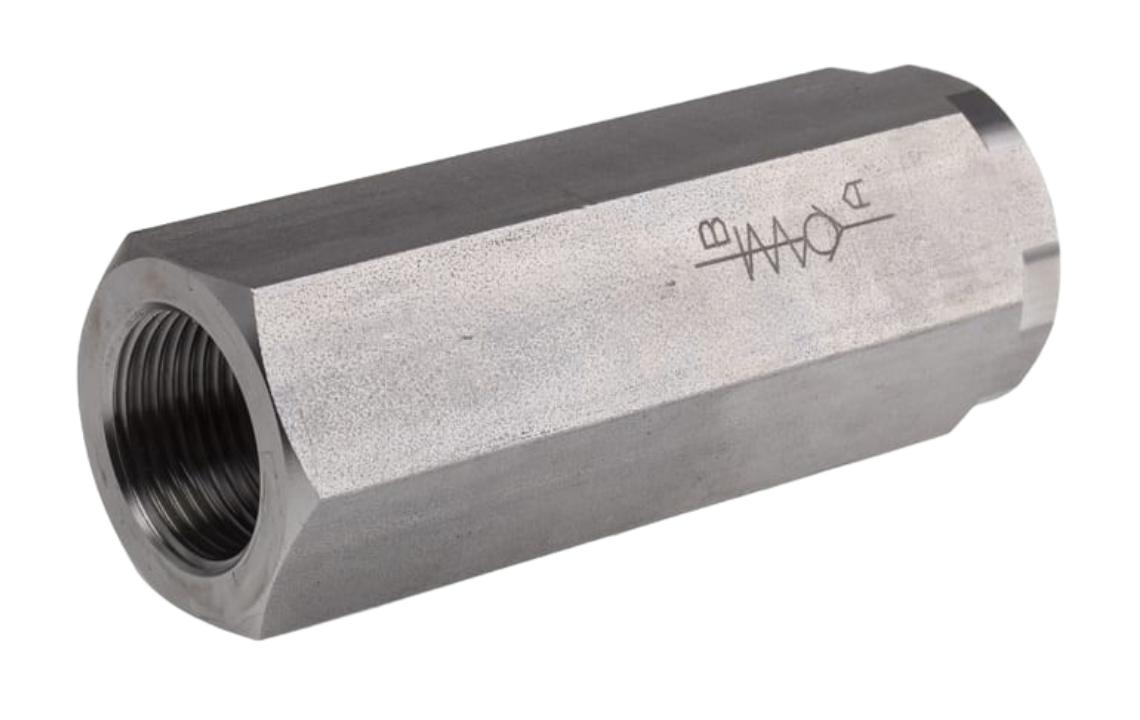
A hydraulic check valve is a non-return valve; it manages the liquid flow. The main purpose of hydraulic check valves is to ensure that fluid flows in a single direction. Such valves prevent the fluids from flowing in the reverse direction. It maintains the movement, pressure, and direction of the fluid.
Hydraulic Check Valve Symbol
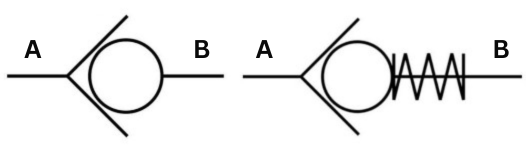
The significance of the hydraulic check valve symbol cannot be ignored because it facilitates installation. As indicated on the symbol, the direction from port A to port B allows free flow once reaching the crash pressure, and in the reverse direction, the flow is blocked forever. The symbol is stamped on the body of the check valve, which helps differentiate it from other components. Hence, the process of installation is simplified and is free from errors with accurate closing direction.
How Does a Hydraulic Check Valve Work?
Check valves have a cylindrical body consisting of ports with inlets and outlets allowing fluid to enter and leave. It has a poppet inside, which moves, and it is meant to block the flow of fluid from moving in the reverse direction.
The fluid pressurizes the poppet to move away from the seat, and the fluid passes through the valve. Whereas, if the fluid tries to make a reverse flow, the fluid presses the poppet against its seat, creating a seal that prevents flow. In many valves, there is a spring that quickly shuts the poppet as soon as the direction of the flow changes. It helps to prevent the reverse flow.
The installation of the hydraulic check valves should have the appropriate orientation, which allows the fluid to flow in a given direction. If the installation is not appropriate, the valve will not function as expected.
Parts of a Hydraulic Check Valve
Hydraulic check valves consist of different components, each having an individual function. The hydraulic check valve parts are discussed below:
Body of Valve
The body of the valve is the external casing, which houses all the internal components. The valve body is made using materials that can withstand harsh environments. The operating conditions of valves are high in pressure and temperature, which require durable and robust materials.
Usually, brass, carbon steel, plastic, and stainless steel materials are chosen. The valve body also needs to be corrosion-resistant so that it can handle fluids like oil, water, and gas.
Spring Mechanism
The hydraulic check valves require a spring mechanism as it maintains the closing position of the valve based on fluid flow. It is made of materials of high strength, like stainless steel. The spring exerts pressure on the poppet so that it is pressed against the seat. It helps prevent the reverse flow of fluid.
Poppet
A hydraulic check valve has a moving component that can either let the fluid flow or restrict it. When the fluid flows in the required direction, the fluid pushes the poppet to open. Upon flowing in the opposite direction, the poppet shuts down and blocks the flow.
Types of Hydraulic Check Valves
There are different hydraulic check valve types, and each valve has its own individual function to perform. The different types of hydraulic check valves are discussed below:
Direct Acting Check Valves
Structure:
Direct-acting check valves consist of a valve body with key parts like a poppet, spring, and seat. The seat works like a seal, helping the poppet rest and block the path of fluid. The poppet opens and closes based on the fluid’s pressure. The spring keeps the valve shut in the absence of flow.
Applications:
- It is also used in the oil and gas sector to prevent the pipes from leaking.
- It helps to protect water against contamination in the water treatment system.
- It is used in pumping systems to prevent reverse flow and protect pumps.
Advantages and Disadvantages:
Advantages
- It is simple and very easily maintained.
- It comprises a compact layout.
- It can very quickly respond to changes in flow direction.
Disadvantages
- The internal components may lead to sudden pressure drop.
- It is not suitable for abrasive fluids
- The seat wears out over time.
Pilot Check Valves
There are two types of pilot check valves, as shown below.
Single Pilot Check Valves
Structure:
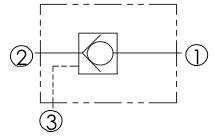
Single pilot check valves contain a poppet, flow path, and seat. They have a pilot port
that connects with the control circuit. In the absence of pressure and fluid flow, the valve is closed, and in its presence, the valve is open.
Applications:
- It is used in industrial motors to prevent backflow.
- Water treatment plants comprise single pilot valves to reverse the flow of fluid during maintenance.
Advantages and Disadvantages:
Advantages
- Single pilot valves offer improved control in flow and pressure management.
- It comprises a pilot line that helps to operate remotely.
- The valve can respond quickly in case of changes in flow conditions.
Disadvantages
- It has a complex layout and needs a pilot line.
- If the pilot line blocks the valve, it ends up failing.
- The pilot components need maintenance.
Double Pilot Check Valves

Structure:
Double pilot check valves comprise two pilot lines; they control different spools in the same body. The complex flow management is conducted using double pilot check valves. The flow of fluid moves in either direction depending on the pilot pressure from the two sides. Each pilot line can open or close its corresponding seat, and let.
Applications:
- Double pilot valves are used in loaders and excavators, and they help maintain the bucket or arm’s position.
- Industrial machines that need precise control of movement use these valves like material handling systems.
Advantages and Disadvantages:
Advantages
- It offers flexible control of flow directions.
- It offers enhanced prevention of backflow in both directions.
- It can accommodate hydraulic systems with complex mechanisms.
Disadvantages
- It is highly complex and has a high chance of potential failure.
- The installation and maintenance are very challenging.
- The cost of installation is high.
Factors to Consider When Choosing a Hydraulic Check Valve
Selection of the hydraulic check valve requires considering some crucial factors. It is critical to assess the below suggested aspects to ensure that the hydraulic check valve is suitable.
Flow Capacity
When choosing the hydraulic check valve, it is important to assess the flow rate capacity of the requirement of the hydraulic system. It helps minimize the pressure drop and even helps in maintaining efficiency.
Cracking Pressure
Cracking pressure refers to the pressure which is needed to open the valve and let the fluid pass. Hence, it is important to choose a valve that suits the application’s cracking pressure. Sensitive systems may need low cracking pressure, and applications that require strong pressure maintenance require high cracking pressure.
Pressure Rating
The system’s operating pressure and valve’s pressure rating must be compatible with one another. Hence, a hydraulic check valve should be selected based on the suitable pressure rating. It helps prevent leakage and other failures in the long run.
Valve Mounting Type
The type of mounting for the hydraulic check valve is also considerable. You must assess the way it will be installed and the application for which it is installed.
Selecting the right mounting type helps to ensure that the valve integrates with the existing system properly. There are three different types of valve mounting, as given below:
- Inline Mounting: Inline mounting is the simplest one; it is easy to install and maintain. They are installed directly in the existing system and do not need any special fitting.
- Cartridge Designs: These check valves are designed to be inserted in the manifold and help create a custom hydraulic system. They have fluid paths integrated within them.
- Subplate Mounting: Subplate mounting comprises check valves that are connected to a subplate. This subplate works like a channel for fluid and helps replace the valve very quickly.
Hydraulic Check Valve Prices and Buying Guide
The price of hydraulic check valves is dependent on many factors. It consists of considering the material of valves, the size, the complexity of the design, and even the pressure rating. The basic valves are made using basic materials, whereas complex valves have complex features and require robust materials.
The prices do vary with the type of valve you choose, as the advanced features need special components and systems. Hence, choose the valve that can operate in your given environment, and accordingly, the price would vary. HYDRAFLU offers exceptional quality hydraulic check valves at affordable prices, and you can take a quote based on your custom requirements.
Conclusion
Understanding the functionality and mechanism of hydraulic check valves helps integrate them into your system in a better way. It even helps to choose the right type, features, and materials required in a check valve. If you are in search of high-quality and specialized hydraulic check valves, you can contact HYDRAFLU.

