


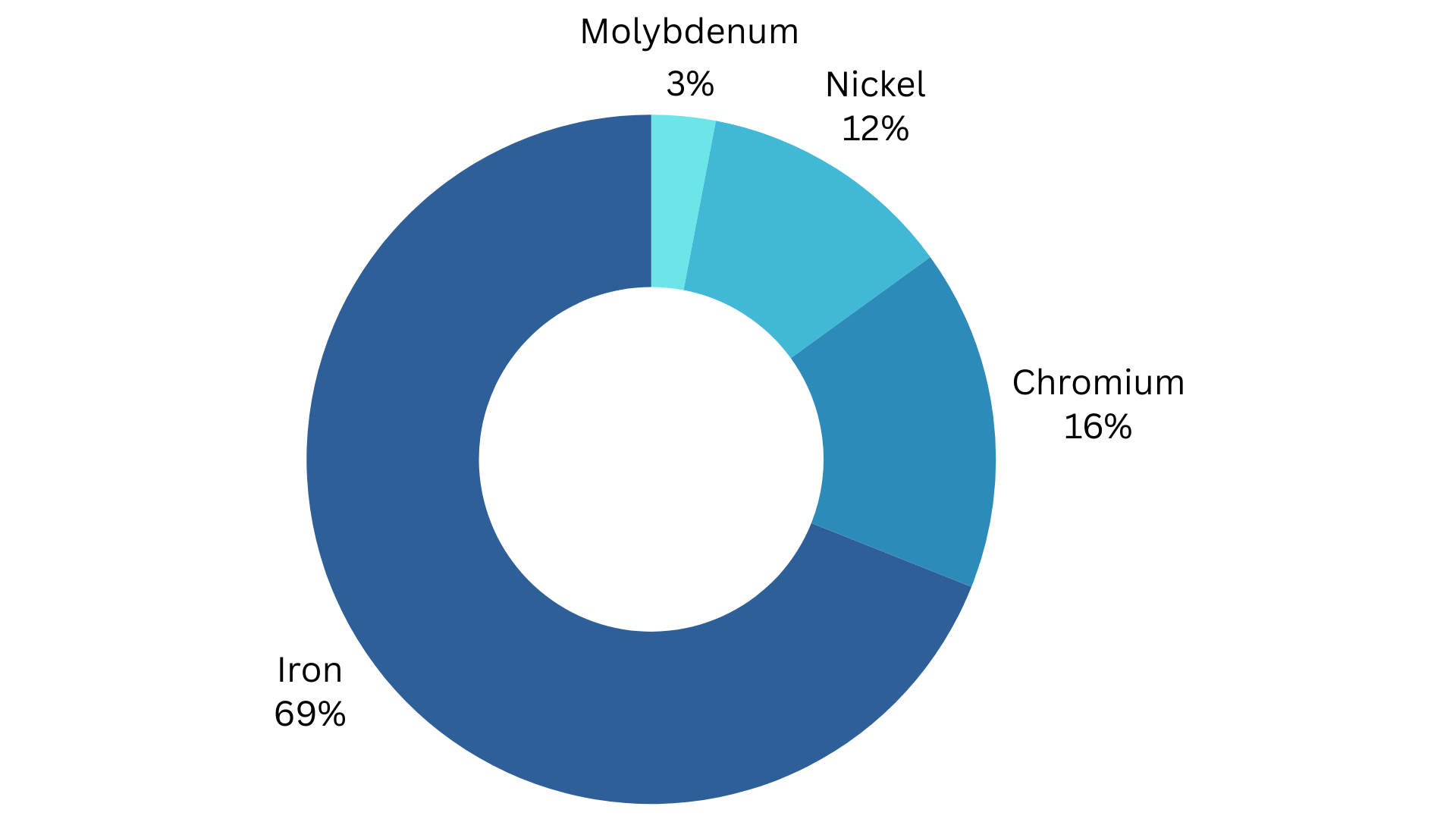
Figure: 316 Stainless Steel Composition
Stainless steel is a favorite metal for surgical tools and instruments because it’s exceptionally hard, corrosion-resistant, and easy to clean. This metal is utilized in most business sectors thanks to its beneficial properties. Before taking the time to put stainless steel through processing, it’s essential to know at what levels the melting point of stainless steel occurs. This information is essential when melting and forming the metal.
What Temperature is the Melting Point of Stainless Steel?
Stainless steel must be exposed to a minimum temperature of 1,370 C or 2,500 F to melt. There are types of the steel that demand temperatures reaching 1,530 C, which is 2,800 F.
Stainless steel’s melting point goes up or down based on what metals are used in its mixture. Anyone who wants to process stainless steel scrap and form new items from the metal must understand the different melting points and how to effectively melt the metal.
What Changes the Stainless Steel Melting Point Values
Specific pieces of stainless steel have different melting points. Every piece of stainless steel is created by combining several varying metals together. The selected metals adjust the final melting point. The most important factor is always going to be the formula of the stainless steel, but there are other factors as well.
If impurities are found in the metal they will lower its melting point. Most stainless steels have at least a small percentage of impurities such as phosphorus, oxygen, and sulfur. These elements decrease the structural integrity of the stainless steel, making it easier to melt.
Pressure levels change melting points in metal. Greater pressures increase the metal’s melting point while lowering temperatures make the metal easier to melt.
The combination of different metals does the most to determine the final melting point of the stainless steel. This is especially true for chromium. Chromium melts at approximately 1,900 C (3,465 F) making it far more difficult to melt than stainless steel. This is why varieties with chromium are harder to melt.
Austenitic Stainless Steel
Melting Point: (1400 – 1450 C) or (2,550 – 2,640 F)
Austenitic stainless steel uses a formula with a higher quantity of nickel, making it easier to melt. Austenitic stainless is heavily relied on for building appliances and for making hospital equipment.
Martensitic and Ferritic Stainless Steel
Melting Point: (1370 – 1480 C) or (2,538 – 2,736 F)
These varieties of stainless steel have the highest melting points because they have a greater quantity of carbon. Ferritic is known for having the most chromium with up to 30% in its formula, while martensitic stainless steel has the greatest tensile strength with up to 2,000 MPa.
Why Stainless Steel is Used Today
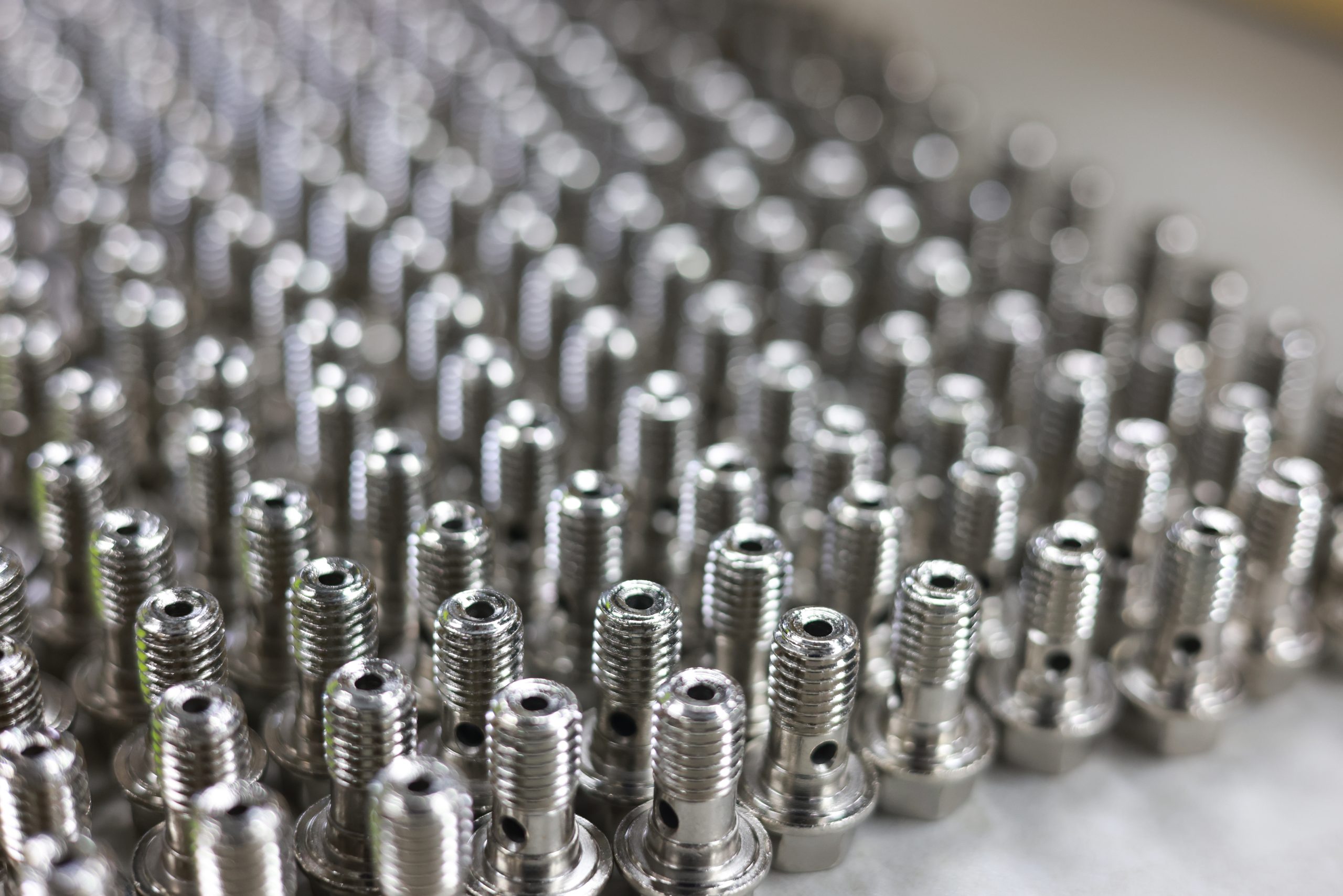
Stainless steel shares strengths with steel, while being more resistant to corrosion. The metal has a brilliant appearance and fends off corrosion better because of its high concentration of chromium. Stainless steel is also a bit harder than steel, making it resistant to scrapes and slight damage. Stainless steel is easy to clean and hard, making it exceptionally good for medical tools, knives, and other products that need to last. These specific benefits make stainless steel ideal for use in most industries. Understanding the melting point of stainless steel is the first step in understanding how to form and use this metal. In the Hydraulic industry, hydraulic pipes and fittings are always made of stainless steel.
The Melting Point of Other Heavily-Used Metals
Stainless steel comes with a greater melting point than many alternatives. This high melt value makes it well-suited for use in high-temperature applications. It’s just one of the many commonly used metals found in most products we rely on today. Every metal has its own unique melting point. Lead has one of the lowest melting points while tungsten is known for being incredibly difficult to melt.
Use the table to learn about various melting points in common metals used today. Understanding the basics about melting these metals can help you understand why they are used how they are, and why some metals are better than others for specific jobs.
| Types of Metal | Melting Point | Melting Point |
Lead | 328 Celsius | 622 Fahrenheit |
Zinc | 420 Celsius | 787 Fahrenheit |
Aluminum | 660 Celsius | 1,220 Fahrenheit |
Brass | 930 Celsius | 1,710 Fahrenheit |
Silver | 961 Celsius | 1,762 Fahrenheit |
Gold | 1063 Celsius | 1,945 Fahrenheit |
Copper | 1084 Celsius | 1,983 Fahrenheit |
Cast Iron | 1,204 Celsius | 2,200 Fahrenheit |
Nickel | 1,453 Celsius | 2,647 Fahrenheit |
Chromium | 1,907 Celsius | 3,465 Fahrenheit |
Tungsten | 3,422 Celsius | 6,192 Fahrenheit |
Furnace Technology Used to Melt Stainless Steel Today
Both induction furnaces and arc furnaces are used for melting stainless steel. They’re modern and work well, though they function differently. Both technologies are used heavily, though each has its strengths and weaknesses.
Induction Furnaces
An induction furnace utilizes magnetic fields to generate heat. As the machine runs it creates eddy currents and these are what melt the metal. These currents generate heat that eventually melts the stainless into a molten liquid. An induction furnace is known for being energy efficient and for rapidly heating for smaller batches. The furnaces can be used periodically, unlike blast furnaces that are always kept hot.
Electric Arc Furnaces
An electric arc furnace sends currents through the metal to form brilliant arcs of electricity. It’s these intense arcs that make the heat. Graphite electrodes are applied to the center of stainless steel scrap piles and electrocuted to form an intense arc that heats the metal and spreads heat outwards. The molten metal expands until eventually the full furnace is melted. Electric arc furnaces suck up more energy than induction furnaces. An electric model has fewer maintenance costs, however, making it an excellent option for long-term melts.
Conclusion
Stainless steel is similar to steel in many ways, including its melting point, but the metal is used for very different applications. Most industries make use of this shiny metal today, and each has to understand the melting point of stainless steel before they can. Stainless steel has a high melting point, it’s hard and exceptionally durable. You can tell a lot about a metal from its melting point, and hopefully, you have a better understanding of stainless steel and some of the other metals commonly used today.

